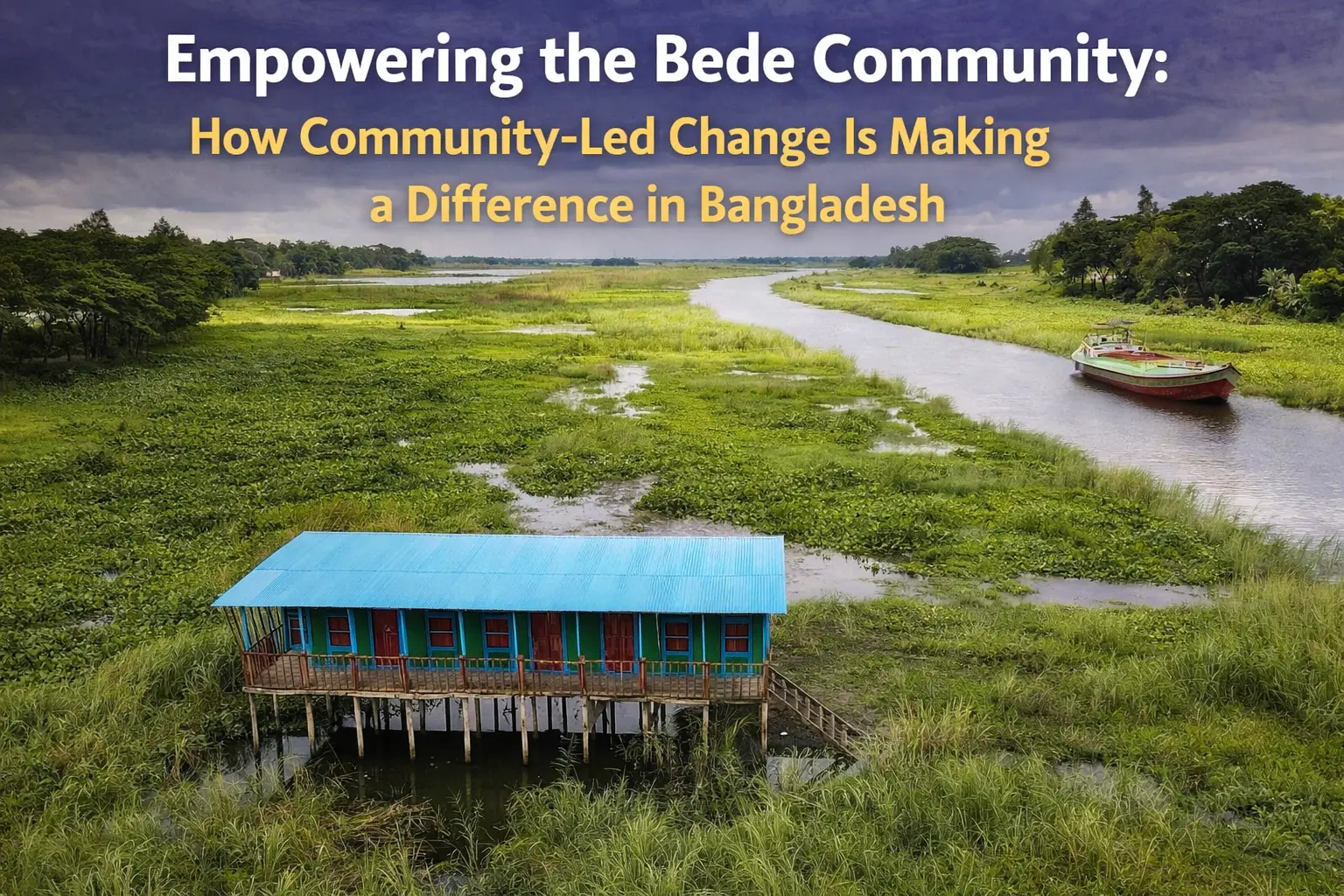
To bring growth and the promise of a brighter future to the Bede community—a marginalized nomadic group in Bangladesh living on boats—GFC’s youth-led partner Alokito Kori stepped in. Through a deeply community-led approach, the organization has introduced vital educational, financial, and social support.
Life on the Water
Imagine spending your entire life on a small wooden boat traveling across the sweeping rivers of Bangladesh. The boat is not just a means of transportation; it is where you cook, sleep, bathe, and raise a family.
This is the daily reality for the nomadic Bede community. Long subjected to social discrimination, their lack of a permanent land address severely complicates their access to basic services like formal education and healthcare. While Bangladesh boasts a primary education enrollment rate of 77%, the rate within the Bede community sits at less than 1%. Preventive healthcare is virtually nonexistent—only 2% of Bede children receive standard vaccinations, leaving them highly vulnerable to preventable diseases.
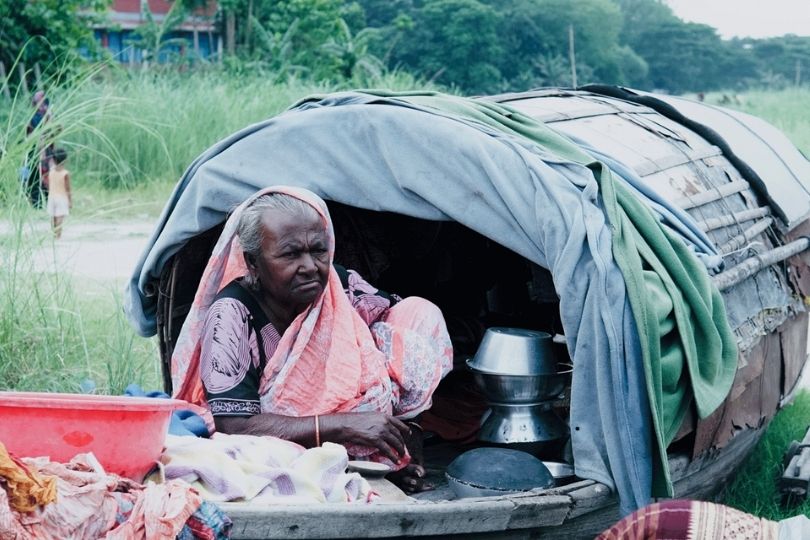
Image: A woman from the Bede community who lives on a boat
Recognizing these profound systemic challenges, Alokito Kori, a youth-led organization, stepped in to drive grassroots change.
Building a School on the Riverbank
Alokito Kori’s journey began in Munshiganj, near the Padma River, where the team focused on building deep, trusting relationships with more than 200 Bede families. The immediate priority was education. Bede children were completely isolated from the school system, largely due to systemic discrimination and bullying in mainstream local schools.
To bridge this gap, Alokito Kori established a dedicated school right within the community. Because families living on boats typically return to specific riverbanks at predictable times of the day, the school was positioned to align with their nomadic rhythms.
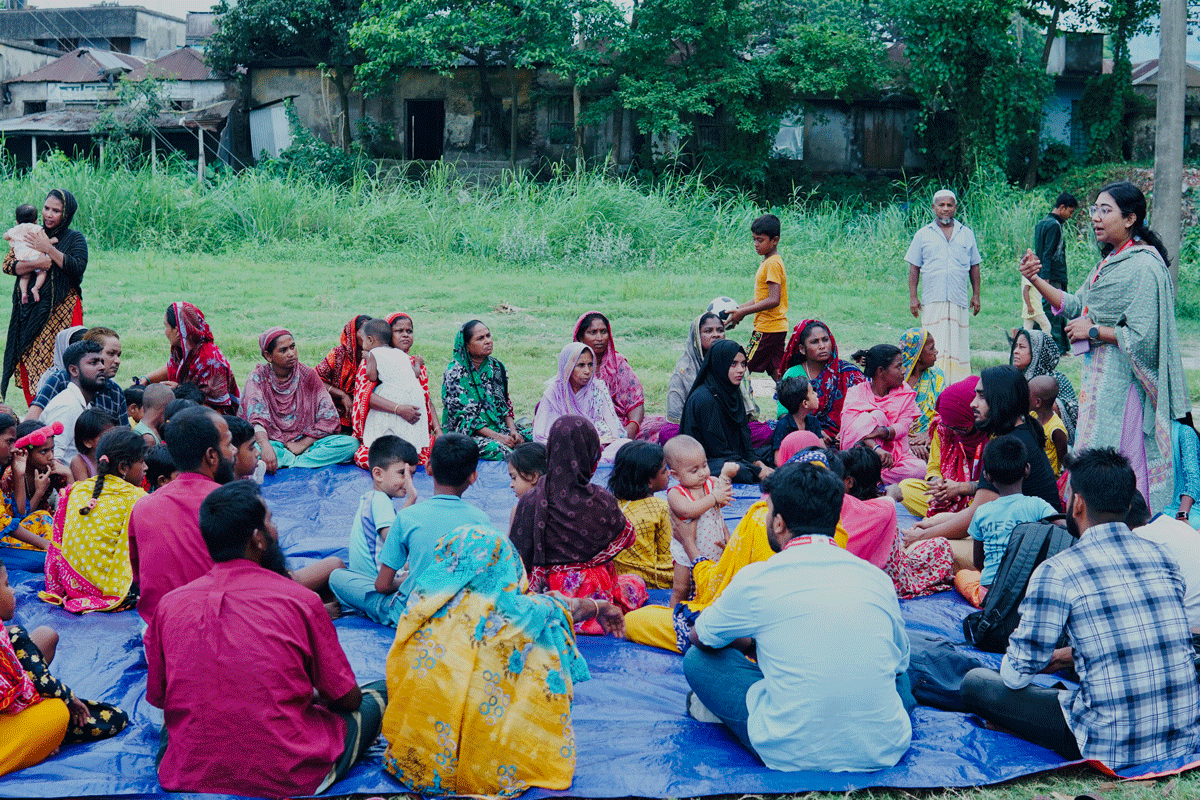
Image: Community-led transformation in action: Bede youth and elders gather on the riverbanks to chart a new path forward for their children.
The strategy worked. More and more children began to attend, displaying an immense appetite for learning. The makeshift school quickly became a beacon of hope, proving that alternative education models could thrive in marginalized spaces.
Beyond the Classroom: A Multidisciplinary Approach
The team soon realized that education alone could not break the cycle of poverty. The Bede community faced a web of intersecting challenges: deep financial instability, chronic malnutrition, child marriage, and domestic violence. To address these roots, Alokito Kori adopted a multidisciplinary framework focused on long-term survival: improving immediate living conditions, ensuring food security, fostering financial independence, and tackling deep-seated social issues.
Central to this evolution has been the partnership between Alokito Kori and the Global Fund for Children (GFC), under an initiative supported by We Trust. This collaboration champions true community-led development, encouraging the Bede people to take full ownership of their destiny.
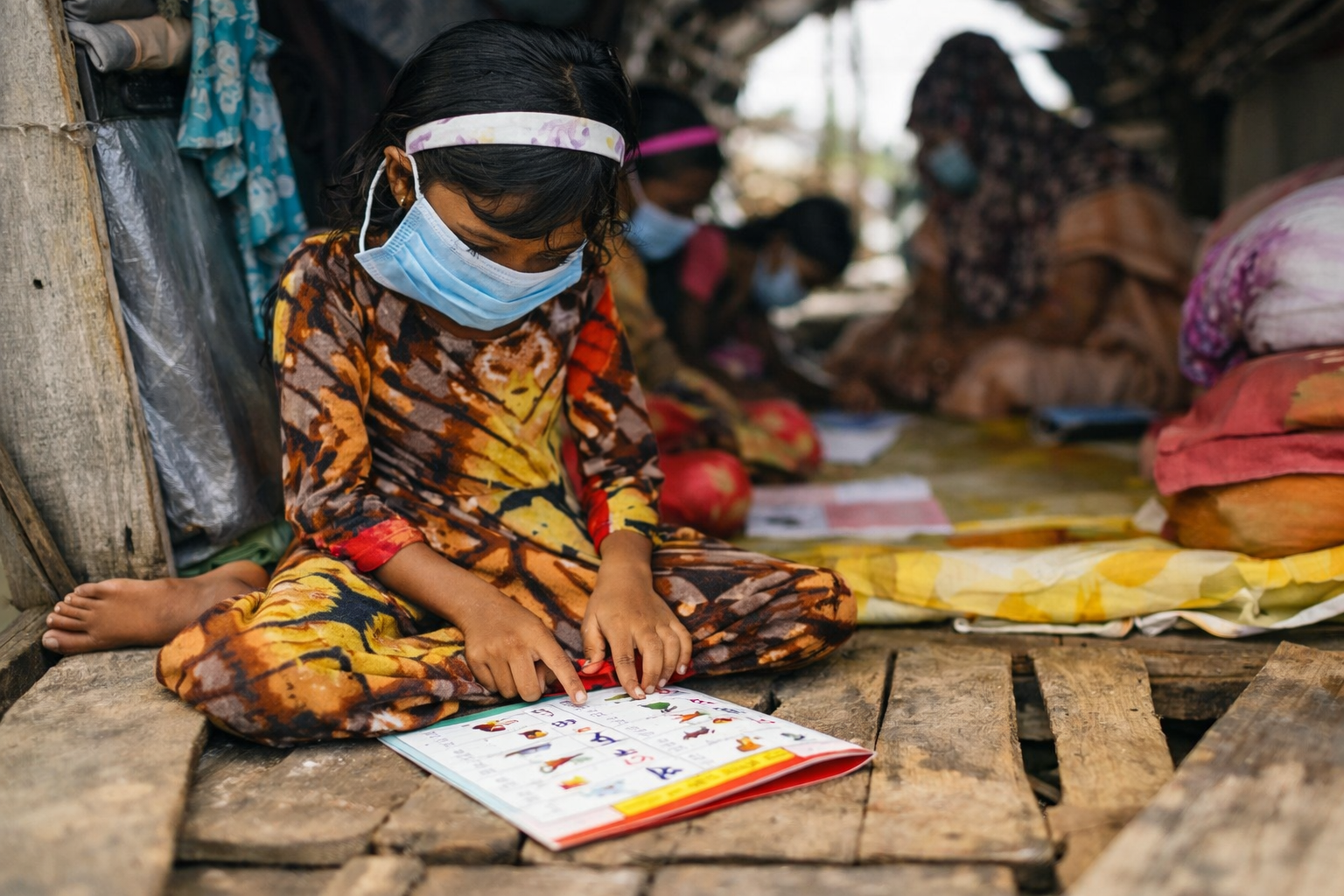 Image: Sumaiya, sitting with her workbook, learning letters despite school closures.
For over nine years, Alokito Kori has worked to facilitate this sense of community ownership. Initially, many families were hesitant to step out of their traditional comfort zones or collaborate with mainstream society. To break down these barriers, Alokito Kori introduced the SALT (Stimulate, Appreciate, Listen, Learn, Team, and Transfer) framework alongside the CLCP (Community Life Competence Process). Rather than imposing outside solutions, the team trained facilitators from within the Bede community itself.
Jannatul's Story
Jannatul (name changed for privacy) was just 10 years old when she began attending the Alokito School. In her community, girls who are excluded from formal education are frequently married off at a very young age. Through the school’s supplementary education and mentorship programs, Jannatul successfully continued her studies and avoided early marriage.
Today, at 17, she is not only pursuing her own career ambitions but is also serving as a certified SALT facilitator. She now stands on the front lines, helping to guide her own community through sustainable social change.
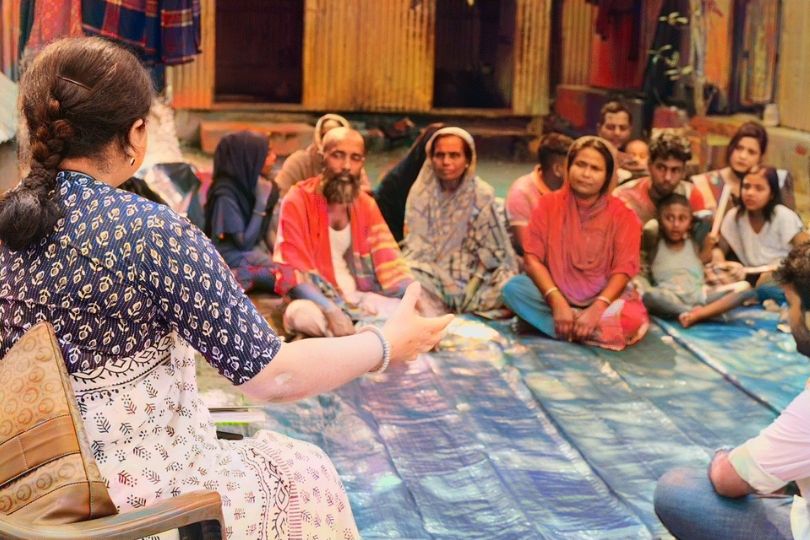
Image: GFC’s Regional Co-Director for Asia, Indrani Chakraborty, listens to the lived experiences of Bede community leaders during a site visit in Bangladesh.
A Shared Vision for Tomorrow
Through structured SALT conversations, the Bede families of Munshiganj have begun collectively owning both their structural challenges and their distinct strengths. Together, they have prioritized three core pillars for their future:
Community-Led Education: To cut out-of-pocket costs that families cannot afford, literate adolescent groups have stepped up to tutor younger children. This peer-to-peer model keeps children in school while building powerful social bonds.
The Eradication of Early Marriage: Direct community dialogue has led to a measurable drop in child marriages. Parents are openly recognizing that a daughter's completed education offers far greater long-term resilience than an early wedding.
Rehabilitation & Sustainable Livelihoods: Recognizing the compounding hardships of boat life, several families are actively organizing self-led relocations to land areas with better infrastructure. Moving closer to accessible job markets, clean drinking water, and permanent schools is paving the way for structural stability and healthier integration with the wider public.
SALT has evolved from a simple methodology into a powerful, community-owned engine for sustainable change—proving that those who live closest to the problem are always the best equipped to solve it.