
Education isn't just a basic right; for some, it is the only lifeline out of generational poverty. But how do you teach a child who doesn't know where their next meal is coming from?
Our journey at Alokito Shishu began in 2015 on the bustling streets of Dhanmondi. We built a makeshift school for the children who spent their days selling flowers and nuts to passing cars. But as we dug deeper, we realized there were communities even further in the shadows—the children of the Bede (river gypsy) and Sweeper (Dalit) communities. These are groups whose very existence is often ignored by broader society.
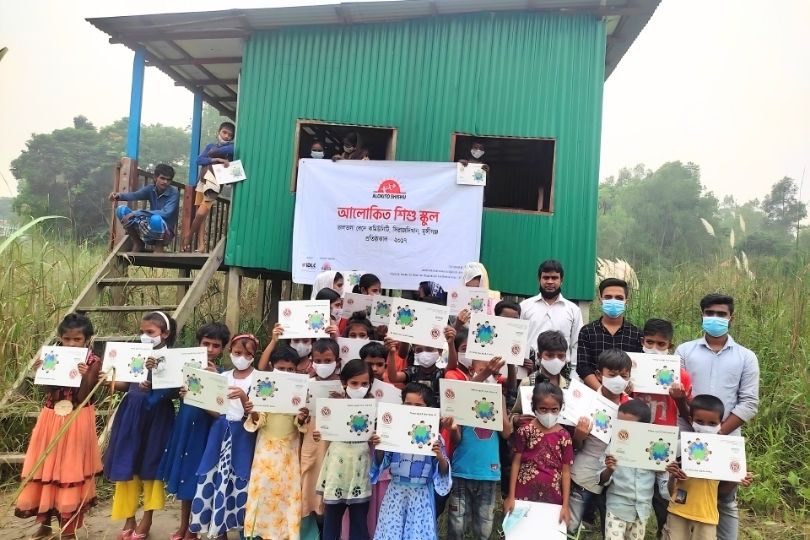
Led by our Founder and CEO, Mithun Das Kabbo, we built two schools in Natore and Munshiganj. When those doors opened, we watched history change. For many of these children, they were the very first generation in their entire bloodline to hold a pencil and receive formal education.
Then, the pandemic struck.
The schools were forced to close. But the virus wasn't the only threat; extreme poverty came knocking. Without the safety net of the classroom, the risk of child labor and early marriage skyrocketed. Our hearts broke as two of our students fell victim to child marriage, their parents simply unable to afford their daily survival.
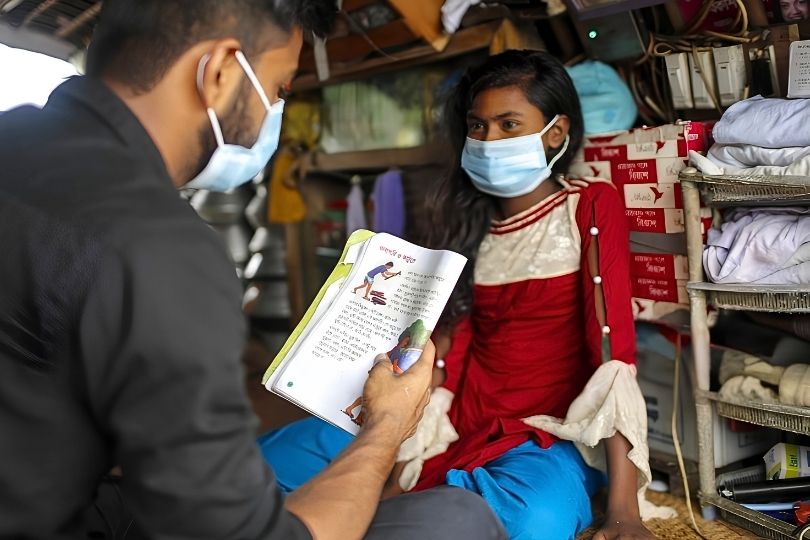
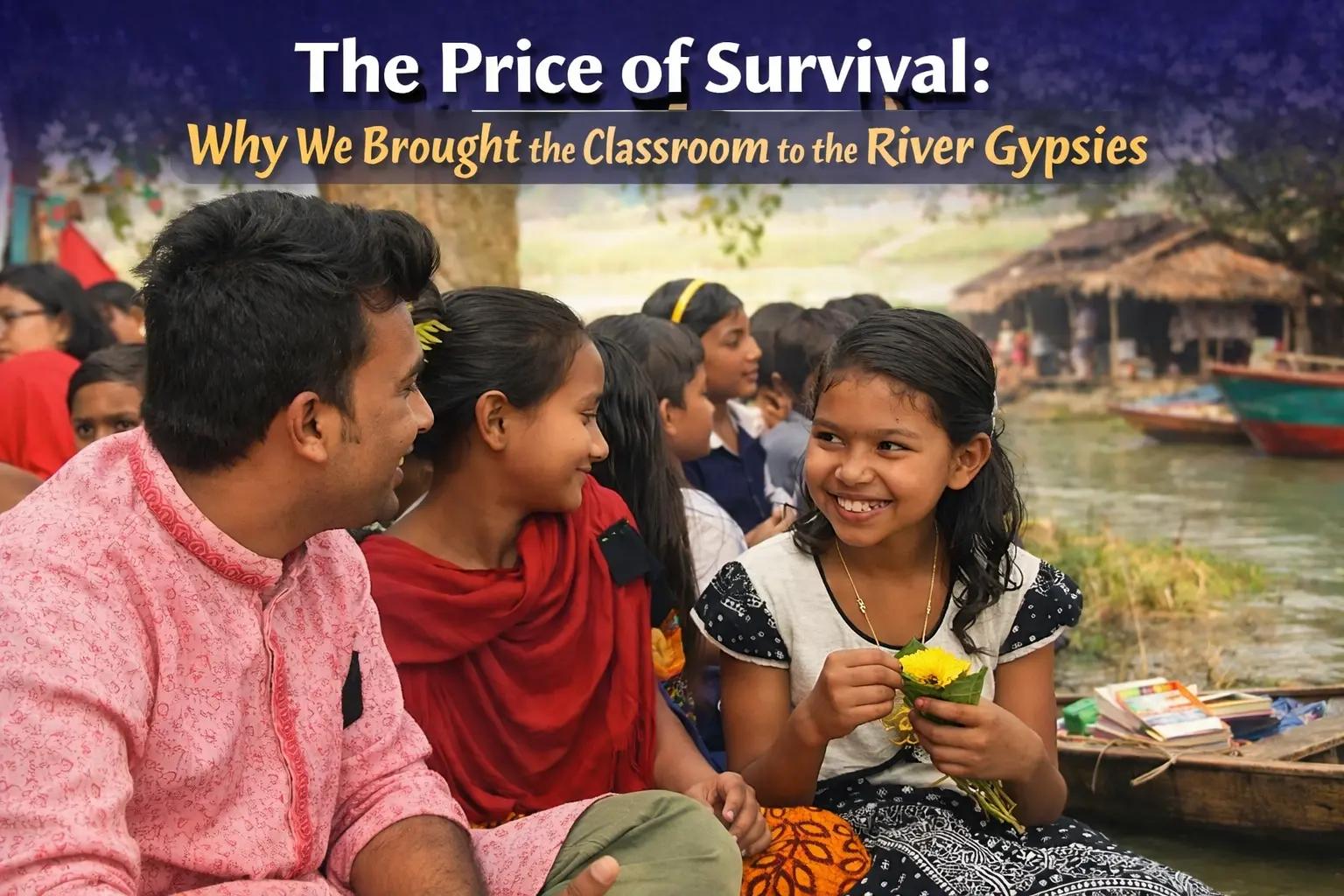
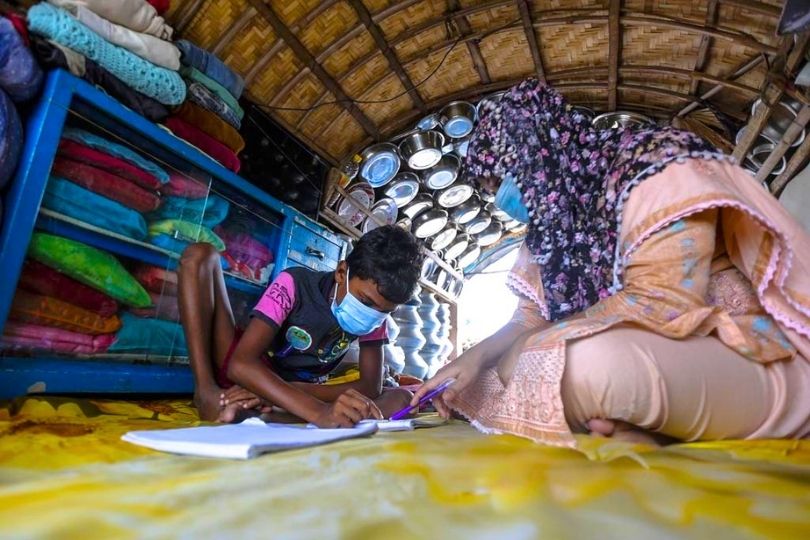
Image: Riya Muni Akter studies in class four at Alokito Shishu School. Every day, a volunteer teacher named Parvez travels by boat to teach Riya and children like her.
We realized a painful truth: a child cannot focus on the alphabet when their stomach is empty. Traditional schooling models fail when faced with extreme poverty. So, we stopped being just a school and became a lifeline. We integrated food relief directly with home-tutoring sessions. Classes were only considered complete when food was safely delivered to the family.
By addressing their survival first, we kept over 400 marginalized children enrolled, learning, and safe, despite a massive drop in sponsorships. True educational leadership isn't about standing at a chalkboard; it's about stepping out of the classroom and fighting for a community's right to survive.